Yunoura Onsen
Spring analysis, temperature and winter snowfall
湯ノ浦温泉 · Ehime
Yunoura Onsen, a hot spring town in Ehime, gets 6 cm of snow a winter, measured the same way as the 3,069 ski areas on this site. The nearest ski area we measure is Ishizuchi SKi & Snowbaord Resort, 23 km away. The map link below opens the exact location.
How this place came to be
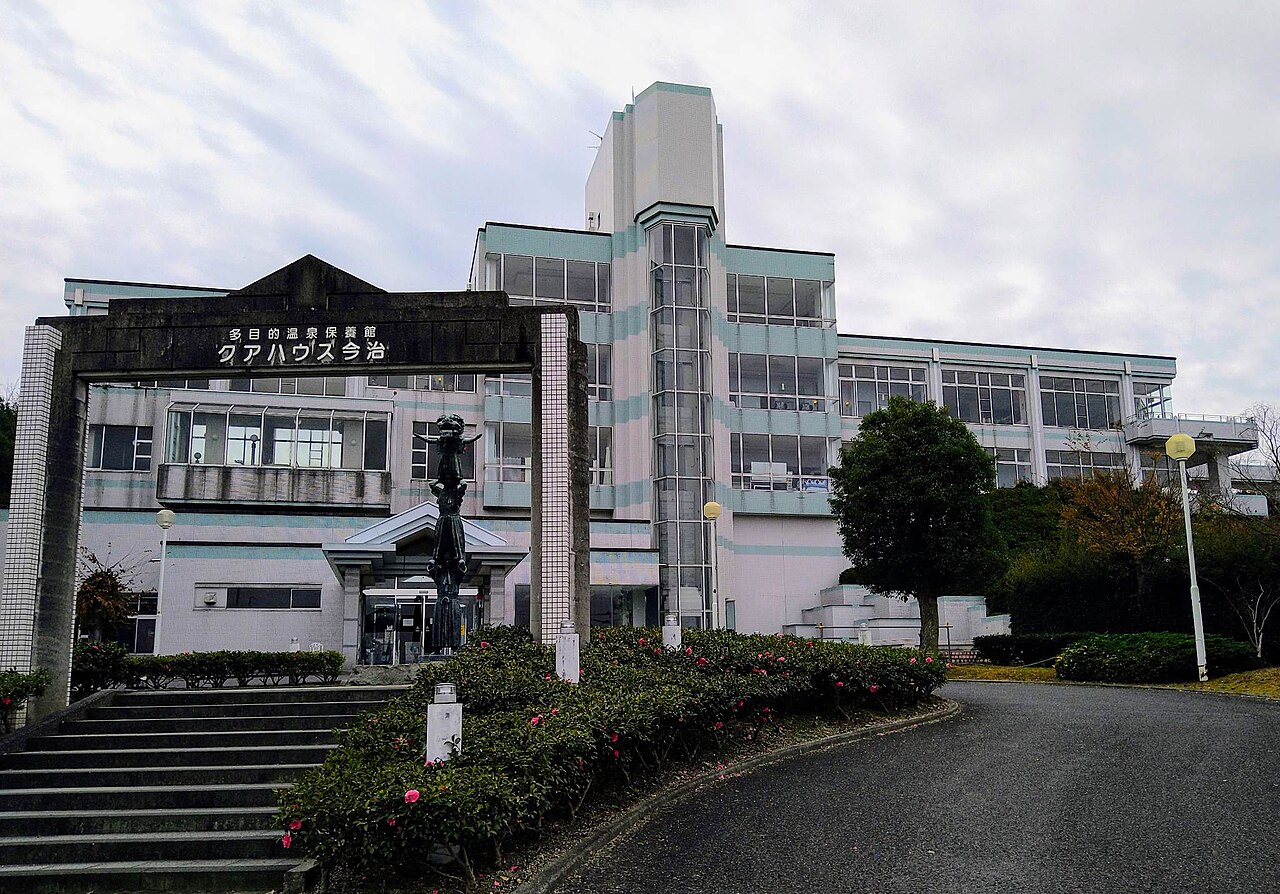
In Imabari, Ehime, on the eastern side of a peninsula jutting into the middle of the Inland Sea. It was the first National Health Resort Hot Spring in Shikoku.
The history of bathing here reaches back to the Nara period. Emperor Shomu founded a provincial convent alongside the provincial temple in this district, and Empress Komyo established a dispensary, a medical foundation. The area is remembered as a place of rest and treatment using water that came up of its own accord.
The source now in use, however, was drilled in 1976. The history is twelve centuries old and the spring itself half a century, and that gap defines the place. It yields 780 litres a minute, clear and soft, carrying radon and fluoride.
One bathhouse here invented shiitake grown on logs watered with the hot spring, and holds a mushroom festival for it every year. The roadside station has a tap where you can take the water home.
The coast nearby runs about eight kilometres of white sand and pines, and is on the national list of a hundred fine shores. A lacquerware workshop with 250 years behind it can be visited.
Sources: 環境省 湯ノ浦温泉 国民保養温泉地計画書
Snowfall in winter
| Per season | 6 cm |
| Rank | 67 of the 77 (out of 79 designated) we could rank |
| Against the median of 77 | -112 cm median 118 cm |
| Winter to winter | 17 cm 1–18 cm, leanest to deepest of twelve |
Find a place to stay · Open in maps
"Find a place to stay" searches Rakuten Travel and contains advertising; we may earn a commission on bookings made through it. The snowfall figures and ranking are calculated independently of that.
Hot springs nearby, as analysed
8 hot spring sources with published analyses lie within 3 km of the centre of this onsen town, nearest first.
Show the sources
| Source | Distance | Temperature | pH | Type | Analysed |
|---|---|---|---|---|---|
| 湯ノ浦温泉第3源泉 | 0.1 km | — | 7.8 mildly alkaline | radioactive (radon) | 2001 |
| a spring in 今治市今治市1号泉源 | 0.2 km | 19.2℃ cold | — | — | 1988 |
| 湯ノ浦温泉第1源泉 | 0.2 km | 19.7℃ cold | 7.8 mildly alkaline | — | 2003 |
| 湯ノ浦温泉第2源泉 | 0.2 km | 19℃ cold | 7.9 mildly alkaline | radioactive (radon) | 2003 |
| 下木地鉱泉 | 0.5 km | 16.6℃ cold | — | — | 1982 |
These are analyses of hot spring sources, not a list of baths you can visit. They date from 1910 to 2005, many from decades ago, so today’s temperature and chemistry may differ. Names are as recorded in Japanese. Temperature and pH bands follow Japan’s standard for analysing hot springs.
Source: processed from the hot spring analysis data in the Geothermal Information Database (GRES-DB), Geological Survey of Japan, AIST
Worth seeing nearby
Places within 20 km (straight line) of this onsen town, chosen from those most read about on Wikipedia, favouring places with an English Wikipedia article, and listed nearest first.
Show the list
| Place | Type | Distance |
|---|---|---|
| Towel Museum Ichihiroタオル美術館ICHIHIRO | Museum | 3.6 km |
| Iyo Kokubun-ji Temple伊予国分寺 | Temple | 4.4 km |
| Senyū-ji Temple仙遊寺 | Temple | 7.4 km |
| Imabari Castle今治城 | Historic site | 8.8 km |
| 鈍川温泉 | Hot spring town | 11.1 km |
| Enmei-ji Temple延命寺 (今治市) | Temple | 11.5 km |
Chosen from the places most read about on Wikipedia, favouring those with an English article. Based on the Japanese Wikipedia lists of sights in each prefecture, as compiled in travel-log-data (CC BY-SA 4.0). English names from Wikidata (CC0). The content of this section is available under CC BY-SA 4.0.
Ski areas nearby
Up to five within 40 km, straight-line, nearest first. Quality rank is out of the 397 Japanese ski areas.
| Ski area | Distance | Quality rank |
|---|---|---|
| Ishizuchi SKi & Snowbaord Resort | 23 km | 384 of 397 |
| Kuma Ski Land | 35 km | 390 of 397 |
Snowfall is a weather-model estimate; against 63 JMA stations it averages about six tenths of what was measured. How we measure