“777”の大当たり「ジャグラー無料体験会」を“グランスノー奥伊吹”で開催中特賞となる「yukiyama×JUGGLER デザイン スノーボード」が「“6本も大当たり”」
OfficialBy: グランスノー奥伊吹公式チャンネル · 21 Mar
No snow yet. The 2026/27 season is planned to open on 13 Nov (the resort’s announcement; it moves with the snow). Snow depth and the seven-day outlook appear once snow is on the ground or forecast.
A weather-model figure, worked out the same way for every ski area, and lower than what actually falls. Use it to compare ski areas, not against the resort’s own totals. How we measure →
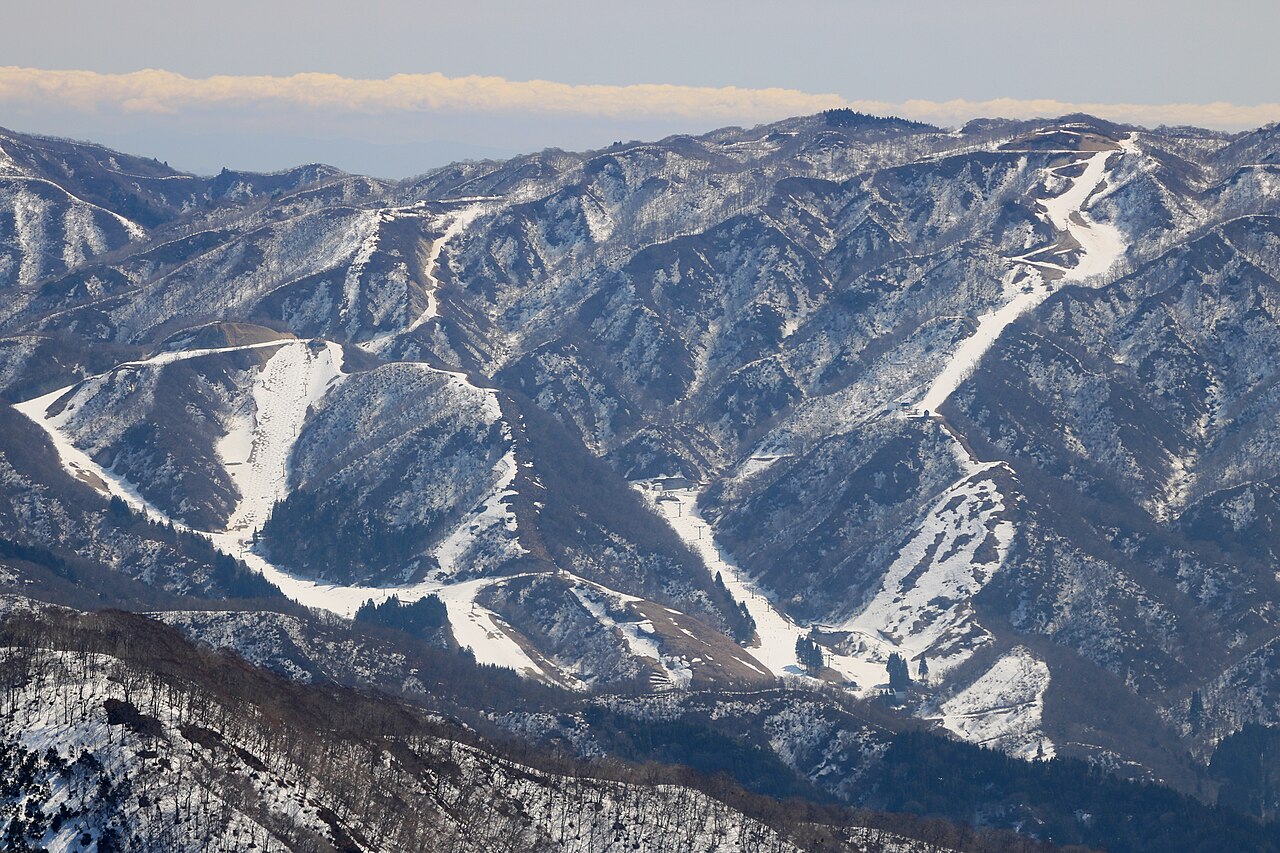
The steepest run, Heavenly46°, takes its name from its maximum pitch of 46 degrees. From the No. 3 car park, an escalator called Snow Warp carries skiers straight up to the slopes. Nagoya is about 50 minutes away by car. Sources: okuibuki.co.jp (sources read 13 Oct 2026; an AI draft the site operator has not yet checked)
Modelled from weather data the same way at all 3,069 ski areas we cover. These are not the resort’s own published figures.
The tick marks the median across every Japanese ski area we measure. All four bars run the same way — longer is better.
The quality score leaves out how much snow falls (it uses temperature, frequency, rain and wind).
Within 50 km in a straight line. Ski areas in the same weather-model cell (about 30 km across) get the same figure.
| Ski area | Distance | Seasonal snowfall | World rank |
|---|---|---|---|
| Akoyama Skijo Snowpal | 16.0 km | 142 cm | 1775 |
| Ohana Resort | 28.0 km | 116 cm | 2148 |
| Yogo Kogen Resort | 29.0 km | 249 cm | 743 |
| Imajo 365 | 32.0 km | 249 cm | 743 |
| Hakodateyama Ski Resort | 38.0 km | 113 cm | 2196 |
Compare side by side with Akoyama Skijo Snowpal and Ohana Resort →
Counted from the runs and lifts drawn on OpenStreetMap, within the boundary of the ski area. These are not the resort’s own published figures.
Only 25% of the vertical on the runs descends to the north or east. The most common direction is west (73%).
See past trail maps on Skimap.org ↗
Source: OpenSkiMap (© OpenStreetMap contributors, ODbL 1.0). How finely ski areas are drawn varies by region, so treat the counts as indicative. Vertical is the difference between the highest and lowest points of the mapped runs and lifts.
The most snow falls in January. March brings 30% of January’s snowfall. That is a steeper fall than the median for ski areas in Japan (52%): the snow here is concentrated early in the season. In amount, March brings 20 cm, less than the median of 46 cm.
Across the 12 winters measured, the average is 194 cm, and 4 of them fell short of it. The leanest was 2015/16 with 21 cm; the biggest was 2024/25 with 339 cm (16.1 times as much).
Snowfall each winter (December–March total). The dashed line is the average; the numbers mark the leanest and the biggest winter.
Footage remains the copyright of each operator. JAPANSNOWLINE neither stores nor redistributes it.
Okuibuki and Yogo webcams & snow report — all 5 ski areas →
Videos remain the copyright of whoever filmed them. JAPANSNOWLINE stores no video and plays everything through the standard YouTube player.
More than we show here.
Within 20 km in a straight line, nearest first. Some lie over a pass that is closed in winter.
| Place | Type | Distance |
|---|---|---|
| Mount Ibuki伊吹山 | Mountain | 11.3 km |
| Odani Castle小谷城 | Historic site | 12.4 km |
| Lake Yogo余呉湖 | Nature | 18 km |
| Shizugatake賤ヶ岳 | Mountain | 18.1 km |
| Tokuyama Dam徳山ダム | Nature | 19.1 km |
| Nagahama Castle長浜城 (近江国) | Historic site | 19.7 km |
Chosen from the places most read about on Wikipedia, favouring those with an English article. Based on the Japanese Wikipedia lists of sights in each prefecture, as compiled in travel-log-data (CC BY-SA 4.0). English names from Wikidata (CC0). The content of this section is available under CC BY-SA 4.0.
Checked on the official site (13 Oct 2026) · Source. Compare with other ski areas →
Other booking sites: Booking.com ↗ · Agoda ↗ · Rakuten Travelad ↗
“ad” marks links that pay us a commission if you book. Links without it are not affiliated.
Where the snow falls · 5 Sep 2026
Is Western Japan Snowier Than It Looks? Our Model Against the Weather StationsWestern Japan's ski areas look thin in our data — a median of 125 cm against a national 249 cm. Against 16 Japan Meteorological Agency stations, the model we use returns 44% of what the ground records there. The region is far snowier than our own numbers say.