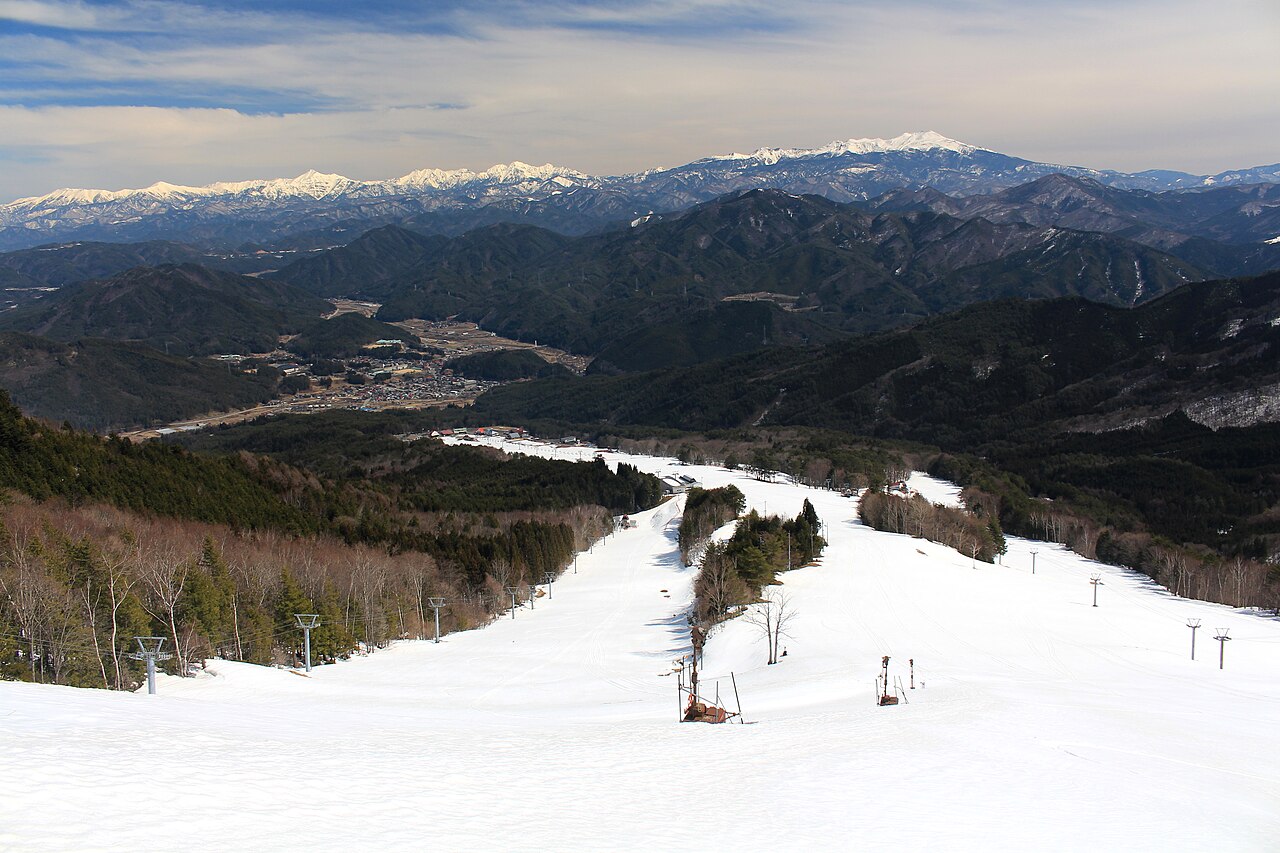
No snow yet. Not open yet for 2026/27. We have not yet found an official opening date. Snow depth and the seven-day outlook appear once snow is on the ground or forecast.
Typical snowfall
150cm
A weather-model figure, worked out the same way for every ski area, and lower than what actually falls. Use it to compare ski areas, not against the resort’s own totals. How we measure →
Elevation
857–1,259 m
Across
2.0 km
Opened in 1963, the Takayama city-run ski area closed after 59 years, with the 2022-23 winter its last. It was taken over by a former snowboard competitor whose grandfather once ran a hut on the hill, and reopened with snow play as the focus. In summer the slope is covered by a sunflower garden. Sources: chunichi.co.jp, gifu-np.co.jp, hidatakayama.or.jp (sources read 13 Oct 2026; an AI draft the site operator has not yet checked)
How much snow it gets
Modelled from weather data the same way at all 3,069 ski areas we cover. These are not the resort’s own published figures.
Seasonal snowfall
150cm
per season
Worst of 12 winters
101cm
The middle winter of the 12: 136 cm. The best: 262 cm.
World rank
1665
of 3,069 worldwide
Rank in country
317
of 397 in Japan
Elevation rank
119
Highest to lowest, of 397 in Japan. The centre point sits at 1,011 m, 245 m above the national median.
Quality rank
332
of 397 in Japan
Temp when snowing
−2.7°C
Japanese median: −3.6°C
Rain days
23%
Japanese median: 16%
Days over 5 cm
7%
Japanese median: 15%
Wind when snowing
18km/h
Average daily peak, 10 m above ground across a model grid cell; not the wind on ridges or lift tops
Dryness34
Frequency21
Freedom from rain41
Calm when snowing (model grid)97
The tick marks the median across every Japanese ski area we measure. All four bars run the same way — longer is better.
The quality score leaves out how much snow falls (it uses temperature, frequency, rain and wind).
Compared with what is nearby
Within 50 km in a straight line. Ski areas in the same weather-model cell (about 30 km across) get the same figure.
The most snow falls in January. March brings 55% of January’s snowfall. That is in line with the median for ski areas in Japan (52%). In amount, March brings 27 cm, less than the median of 46 cm.
39cmDec
49cmJan
34cmFeb
27cmMar
Average snowfall by month, last 12 winters
Winter by winter
Across the 12 winters measured, the average is 150 cm, and 7 of them fell short of it. The leanest was 2015/16 with 101 cm; the biggest was 2014/15 with 262 cm (2.6 times as much).
Chosen from the places most read about on Wikipedia, favouring those with an English article. Based on the Japanese Wikipedia lists of sights in each prefecture, as compiled in travel-log-data (CC BY-SA 4.0). English names from Wikidata (CC0). The content of this section is available under CC BY-SA 4.0.
Map
The weather map, and where it sits among nearby ski areas.
Pick dates and guests to check rooms on Rakuten Travel
Prices are the lowest Rakuten Travel lists; a property name, or “Pick dates and guests” above, shows prices and rooms for your dates.
Contains advertising. Property names and Rakuten Travel’s booking pages are in Japanese. · Property data by Rakuten Travel (Supported by Rakuten Developers)
Places to stay on the map
1 places within 12 km of the slopes, as mapped on OpenStreetMap, many of them small inns and pensions. Many are not on booking sites — open the name for the website or the map.
If you want to sit in an outdoor bath with snow on the ground, the question is when, not just where. We worked out snow depth at 14 Japanese hot spring towns over the last three winters from weather-model data: when it arrives, when it goes, and how many days it is actually deep.