Japan vs elsewhere / Planning a trip
· updated
Is Japan's Snow Really Better Than Australia's? Mostly, It Is the Rain
We measured snow quality at 456 ski areas. All ten Australian ones land in the bottom 70. Perisher is 388th and Niseko is 38th — a far wider gap than the snowfall figures suggest, and it is made of rain.
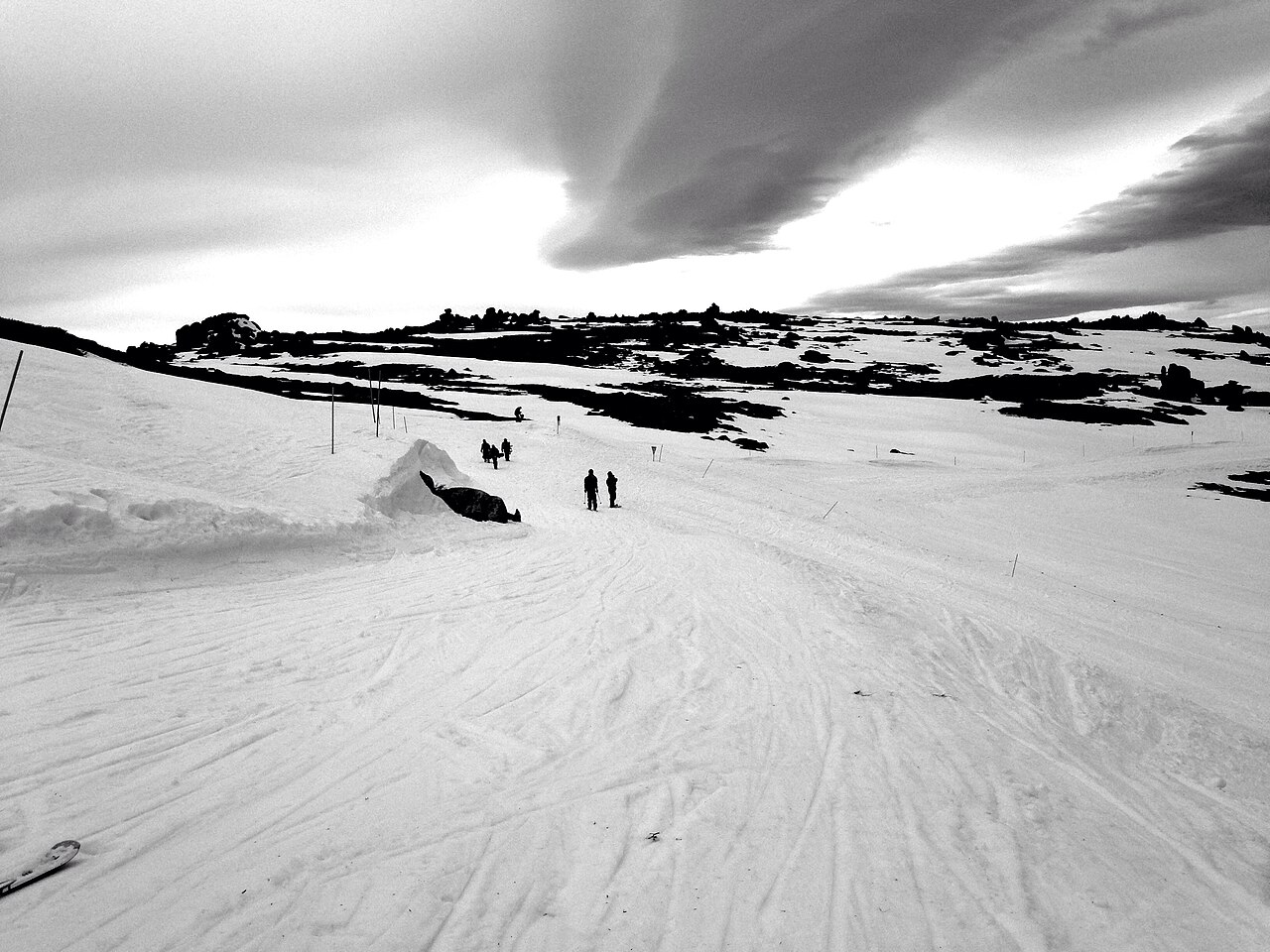
On snowfall totals, the gap between Australia and Japan is smaller than the marketing implies. Niseko gets about 1.4 times what Perisher gets — real, but not the chasm you might expect from a ten-hour flight.
We have now measured something else at 456 ski areas: not how much snow falls, but what it is like when it does. On that measurement the gap is not 1.4×.
| Perisher 🇦🇺 | Niseko 🇯🇵 | |
|---|---|---|
| Snowfall | 213 cm | 289 cm |
| Snow-quality rank | 388th of 456 | 38th |
| Rain days | 25% | 7% |
| Temperature when snowing | −1.3 °C | −6.2 °C |
| Days over 5 cm | 12 | 21 |
| Odds of fresh snow in 5 days | 41% | 61% |
One winter day in four brings rain to Perisher. At Niseko it is one in fourteen, and the snow falls five degrees colder.
All ten Australian ski areas are in the bottom 70
| Quality rank | Snowfall | Rain days | |
|---|---|---|---|
| 387 | Charlotte Pass | 219 cm | 25% |
| 388 | Perisher | 213 cm | 25% |
| 402 | Thredbo | 186 cm | 24% |
| 418 | Falls Creek | 172 cm | 33% |
| 427 | Mount Hotham | 163 cm | 38% |
| 433 | Mount Buller | 73 cm | 46% |
| 437 | Selwyn | 174 cm | 36% |
| 444 | Mount Baw Baw | 46 cm | 43% |
| 447 | Mount Mawson | 68 cm | 62% |
| 453 | Ben Lomond | 20 cm | 46% |
Australia’s best ski area on this measurement is 387th of 456. 348 Japanese ski areas score higher than it.
Ben Lomond, in Tasmania, gets 20 cm a season and averages well under one day over 5 cm in a winter.
By country
| Ski areas | Quality (median) | Rain days | Temperature when snowing | |
|---|---|---|---|---|
| 🇯🇵 Japan | 397 | 8.4 | 16% | −3.5 °C |
| 🇨🇱 Chile | 11 | 7.7 | 9% | −2.8 °C |
| 🇦🇷 Argentina | 13 | 5.6 | 19% | −1.6 °C |
| 🇳🇿 New Zealand | 25 | 2.3 | 32% | −3.2 °C |
| 🇦🇺 Australia | 10 | 1.2 | 37% | −1.3 °C |
The typical Australian ski area scores a seventh of the typical Japanese one. New Zealand does better but not by much — its best, Invincible Snowfields, is 110th.
Japan is not uniformly good, and that matters here
It would be easy to read this as “Australia bad, Japan good”. The data does not say that.
Japan holds several of the worst entries on the whole list. Tenzan in Saga is 456th — last of 456. Kuju in Oita is 454th. SOL-FA Oda in Ehime is 452nd. These are southern Japanese hills that get warm, wet snow. Tenzan and Kuju score below every Australian resort, Ben Lomond included.
What Japan has is range. The country holds the best entries and some of the worst. Australia’s ten are all clustered at one end, because Australia’s ski areas all sit in the same narrow band of latitude and altitude, close to a warm ocean.
What this means if you are flying north
The reason to fly is not the depth. It is the rain. Perisher’s 213 cm is a real winter. What separates it from Niseko is that a quarter of Perisher’s winter days deliver rain onto that snow, and that its snow arrives at −1.3 °C rather than −6.2 °C.
On a five-day trip, the odds shift from 41% to 61%. That is the practical difference: at home you are more likely than not to see no fresh snow in a working week.
If you are staying in Australia, go to the Snowy Mountains. Charlotte Pass, Perisher and Thredbo are the three best on this measurement, and they are the three highest. The Victorian and Tasmanian fields get less snow and far more rain.
And do not choose your Japanese resort by name. 348 Japanese ski areas beat Australia’s best, and the famous ones are not automatically the good ones — Niseko is 38th of 456, which is excellent, but it is not the top of its own country.
How this was measured
The quality score multiplies four things measured identically at every ski area from the ERA5 reanalysis: temperature on days snow falls (the main component — colder snow is lighter), how often 5 cm or more falls, how often it rains instead, and wind on snow days. Snowfall volume is deliberately excluded, which is why a resort can rank well here and poorly on our snowfall ranking.
The thresholds and weightings are our judgement, not a result. What the score is good for is ordering places measured the same way; the absolute number means little.
Our quality measurement covers 456 ski areas — the 397 in Japan and 59 below the equator. It does not yet cover North America or Europe, so a rank out of 456 is a position within that set rather than a world ranking. Ten Australian ski areas is the whole country as we have it, which makes the country median a description of all of it rather than a sample.
Air temperature is corrected for elevation with the standard 6.5 °C/km lapse rate, because a reanalysis grid cell flattens the mountains inside it. That correction is a model, not a measurement, and it matters most where a resort sits far above its cell.
The model understates mountain snowfall, by about 44% against Japanese ground stations, so every centimetre figure here is a floor. We have no equivalent ground check for Australia, so treat the Australian centimetres as indicative and the ordering — one method everywhere — as the usable part.
Sources: Open-Meteo historical weather data, based on the ERA5 reanalysis (Copernicus Climate Change Service).
Book the trip
We do not take bookings. These are the sites Japanese ski accommodation actually sits on.
Contains advertising. We may earn a commission on bookings made through Rakuten.
Keep reading
Other guides built from the same dataset.