Kazawa Onsen
Spring analysis, temperature and winter snowfall
鹿沢温泉 · Gunma
Kazawa Onsen, a hot spring town in Gunma, gets 136 cm of snow a winter, measured the same way as the 3,069 ski areas on this site. The nearest ski area we measure is Kazawa Snow Area, 2 km away. The map link below opens the exact location.
How this place came to be
The spring rises at 1,525 m on the flank of Mt. Yunomaru (2,101 m). It appears by name in a 1656 document recording a border dispute. The name is said to come from a wounded deer seen healing in the water; that is a legend, not a record.
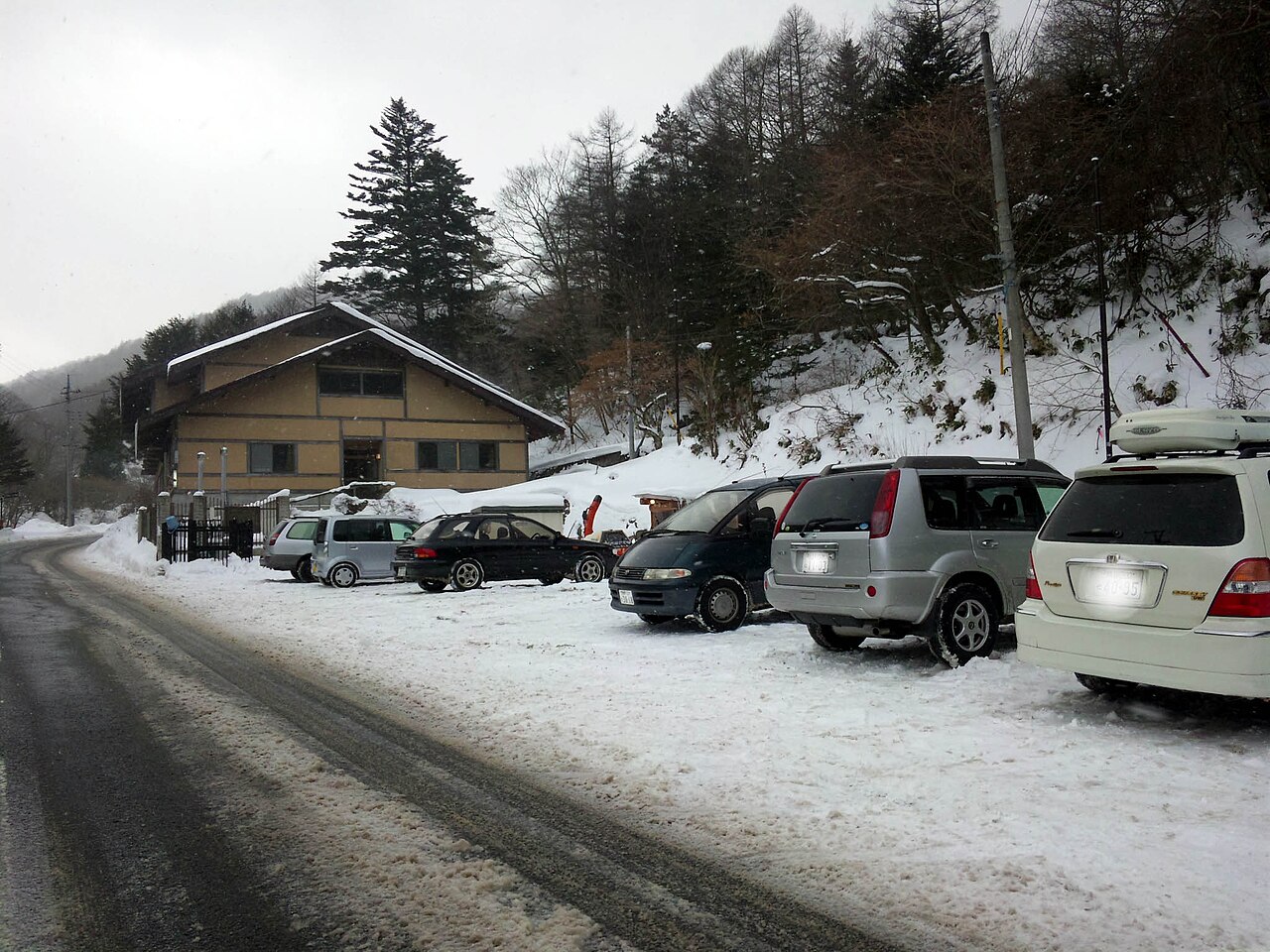
For most of its history you reached it on foot, up a twelve-kilometre mountain path. A hundred stone Kannon statues were set along that path, one every 108 metres, and you can still count your way up past them. A fire in 1918 destroyed the town, leaving a single inn, the Koyokan. The water was piped down the mountain, and that lower settlement is today's Shin-Kazawa Onsen.
This is also where "Yukiyama Sanka", the best-known mountaineering song in Japan, was written. A stone marks the spot opposite the Koyokan, and Tsumagoi village still plays the melody as its noon chime.
In early summer 600,000 azalea plants cover the slopes; they were made a national natural monument in 1956. In winter the Kazawa Snow Area is close by.
Sources: 環境省 鹿沢温泉 国民保養温泉地計画書
Snowfall in winter
| Per season | 136 cm |
| Rank | 34 of the 77 (out of 79 designated) we could rank |
| Within prefecture | 3 of 3 in Gunma |
| Against the median of 77 | +18 cm median 118 cm |
| Winter to winter | 107 cm 95–202 cm, leanest to deepest of twelve |
Find a place to stay · Open in maps
"Find a place to stay" searches Rakuten Travel and contains advertising; we may earn a commission on bookings made through it. The snowfall figures and ranking are calculated independently of that.
Hot springs nearby, as analysed
7 hot spring sources with published analyses lie within 3 km of the centre of this onsen town, nearest first.
Show the sources
| Source | Distance | Temperature | pH | Type | Analysed |
|---|---|---|---|---|---|
| 鹿沢温泉雲井の湯 | 0.8 km | — | 6.6 neutral | bicarbonate | 1986 |
| 鹿沢温泉東雲の湯 | 0.8 km | — | 6.8 neutral | simple | 1989 |
| 鹿沢温泉東急泉 | 0.8 km | 27℃ lukewarm | 6.7 neutral | simple | 1982 |
| 鹿沢温泉竜宮の湯 | 0.8 km | 39.5℃ warm | 7 neutral | bicarbonate | 1982 |
| 鹿沢温泉竜宮の湯 | 0.8 km | — | 6.9 neutral | bicarbonate | 1989 |
These are analyses of hot spring sources, not a list of baths you can visit. They date from 1910 to 2005, many from decades ago, so today’s temperature and chemistry may differ. Names are as recorded in Japanese. Temperature and pH bands follow Japan’s standard for analysing hot springs.
Source: processed from the hot spring analysis data in the Geothermal Information Database (GRES-DB), Geological Survey of Japan, AIST
Worth seeing nearby
Places within 20 km (straight line) of this onsen town, chosen from those most read about on Wikipedia, favouring places with an English Wikipedia article, and listed nearest first.
Show the list
| Place | Type | Distance |
|---|---|---|
| Mount Azumaya四阿山 | Mountain | 7.4 km |
| Mount Neko根子岳 (長野県) | Mountain | 8.8 km |
| Kanbara Kannondō鎌原観音堂 | Temple | 10.1 km |
| Mount Asama浅間山 | Mountain | 10.8 km |
| Ueda Castle上田城 | Historic site | 19.8 km |
| Karuizawa軽井沢町 | Old streets | 20 km |
Chosen from the places most read about on Wikipedia, favouring those with an English article. Based on the Japanese Wikipedia lists of sights in each prefecture, as compiled in travel-log-data (CC BY-SA 4.0). English names from Wikidata (CC0). The content of this section is available under CC BY-SA 4.0.
Ski areas nearby
Up to five within 40 km, straight-line, nearest first. Quality rank is out of the 397 Japanese ski areas.
| Ski area | Distance | Quality rank |
|---|---|---|
| Kazawa Snow Area | 2 km | 256 of 397 |
| Takamine Mountain Park Ski Area | 8 km | 188 of 397 |
| Palcall Tsumagoi Resort Ski & Hotel | 9 km | 141 of 397 |
| Sugadaira Kogen Davos Hill Ski Area | 11 km | 168 of 397 |
| Sugadaira Taro Area | 12 km | 187 of 397 |
Snowfall is a weather-model estimate; against 63 JMA stations it averages about six tenths of what was measured. How we measure