Okuhida Onsen-kyo
Spring analysis, temperature and winter snowfall
奥飛騨温泉郷 · Gifu
Okuhida Onsen-kyo, a hot spring town in Gifu, gets 310 cm of snow a winter, measured the same way as the 3,069 ski areas on this site. The nearest ski area we measure is Honokidaira Ski Area, 9 km away. The map link below opens the exact location.
How this place came to be
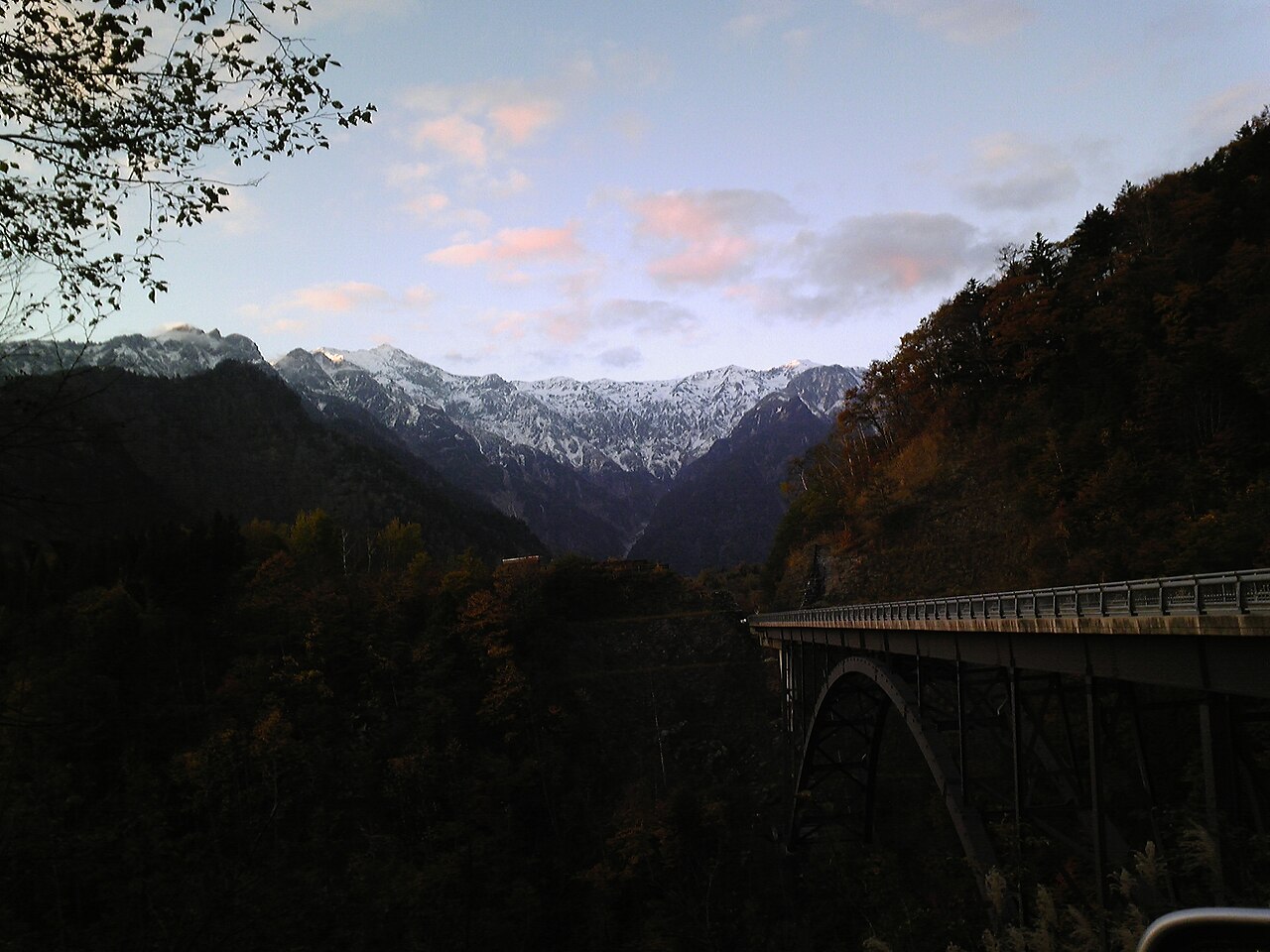
Okuhida is five villages taken together, Hirayu, Fukuji, Shin-Hirayu, Tochio and Shinhotaka, strung along about 18 km of valley at between 800 and 1,300 m. This is the Gifu-side approach to the Northern Alps, with the Hotaka peaks standing at the head of it.
Each village keeps a different story. At Hirayu, Takeda Shingen's troops are said to have pushed into Hida and seen an old white monkey soaking its wounds in a pool; they bathed there themselves and recovered their strength. In the Edo period the lords of the Hokuriku domains stopped here on their journeys to and from the capital. Fukuji is said to have been visited in secret by Emperor Murakami in the Heian period, and one spring is still called the emperor's. At Shin-Hirayu, the wandering monk Enku is said to have arrived in 1690 and stayed about a year.
Hirayu was designated a National Health Resort Hot Spring in 1964, the other four in 1968; the two designations were merged in 2017.
The heat is used very thoroughly. Five geothermal plants generate electricity from it, and what is left goes to fish farming, greenhouses, heating buildings and melting the snow off the roads. In a place with this much winter, the hot water also keeps the roads clear.
Sources: 環境省 奥飛騨温泉郷 国民保養温泉地計画書
Snowfall in winter
| Per season | 310 cm |
| Rank | 10 of the 77 (out of 79 designated) we could rank |
| Within prefecture | 2 of 3 in Gifu |
| Against the median of 77 | +192 cm median 118 cm |
| Winter to winter | 218 cm 215–433 cm, leanest to deepest of twelve |
Find a place to stay · Open in maps
"Find a place to stay" searches Rakuten Travel and contains advertising; we may earn a commission on bookings made through it. The snowfall figures and ranking are calculated independently of that.
Hot springs nearby, as analysed
4 hot spring sources with published analyses lie within 3 km of the centre of this onsen town, nearest first.
Show the sources
| Source | Distance | Temperature | pH | Type | Analysed |
|---|---|---|---|---|---|
| 栃尾温泉栃尾温泉協同組合4号泉 | 1.5 km | 95℃ hot | 7.4 neutral | sulphur | 1964 |
| 栃尾温泉 | 2.2 km | 62.2℃ hot | 7 neutral | — | 1980 |
| 一重ヶ根温泉湯原No.1 | 2.7 km | 37.1℃ warm | 6.2 neutral | — | 1980 |
| 一重ヶ根温泉湯原No.2 | 2.7 km | 46℃ hot | 6.2 neutral | — | 1980 |
These are analyses of hot spring sources, not a list of baths you can visit. They date from 1910 to 2005, many from decades ago, so today’s temperature and chemistry may differ. Names are as recorded in Japanese. Temperature and pH bands follow Japan’s standard for analysing hot springs.
Source: processed from the hot spring analysis data in the Geothermal Information Database (GRES-DB), Geological Survey of Japan, AIST
Worth seeing nearby
Places within 20 km (straight line) of this onsen town, chosen from those most read about on Wikipedia, favouring places with an English Wikipedia article, and listed nearest first.
Show the list
| Place | Type | Distance |
|---|---|---|
| Shinhotaka Ropeway新穂高ロープウェイ | Nature | 8.1 km |
| Mount Yake焼岳 | Mountain | 8.2 km |
| Kamikōchi上高地 | Mountain | 12 km |
| Hida Mountains飛騨山脈 | Mountain | 14 km |
| Hotaka Mountains穂高岳 | Mountain | 14 km |
| Mount Norikura乗鞍岳 | Mountain | 16.6 km |
Chosen from the places most read about on Wikipedia, favouring those with an English article. Based on the Japanese Wikipedia lists of sights in each prefecture, as compiled in travel-log-data (CC BY-SA 4.0). English names from Wikidata (CC0). The content of this section is available under CC BY-SA 4.0.
Ski areas nearby
Up to five within 40 km, straight-line, nearest first. Quality rank is out of the 397 Japanese ski areas.
| Ski area | Distance | Quality rank |
|---|---|---|
| Honokidaira Ski Area | 9 km | 92 of 397 |
| Hirayu Onsen Ski Area | 9 km | 40 of 397 |
| Hida Takayama Municipal Ski Resort | 13 km | 83 of 397 |
| Blue Resort Norikura | 17 km | 36 of 397 |
| Hida Nagareha Resort | 25 km | 166 of 397 |
Snowfall is a weather-model estimate; against 63 JMA stations it averages about six tenths of what was measured. How we measure