Japan vs elsewhere / Planning a trip
· updated
Which Famous Ski Resorts Actually Get the Most Snow? 24 Names, Measured
Niseko is 526th in the world for snowfall. Zermatt is 554th, Jackson Hole 924th, Aspen 1,201st. Measured identically across 3,069 ski areas, the names everyone books and the places it actually snows turn out to be two different lists.
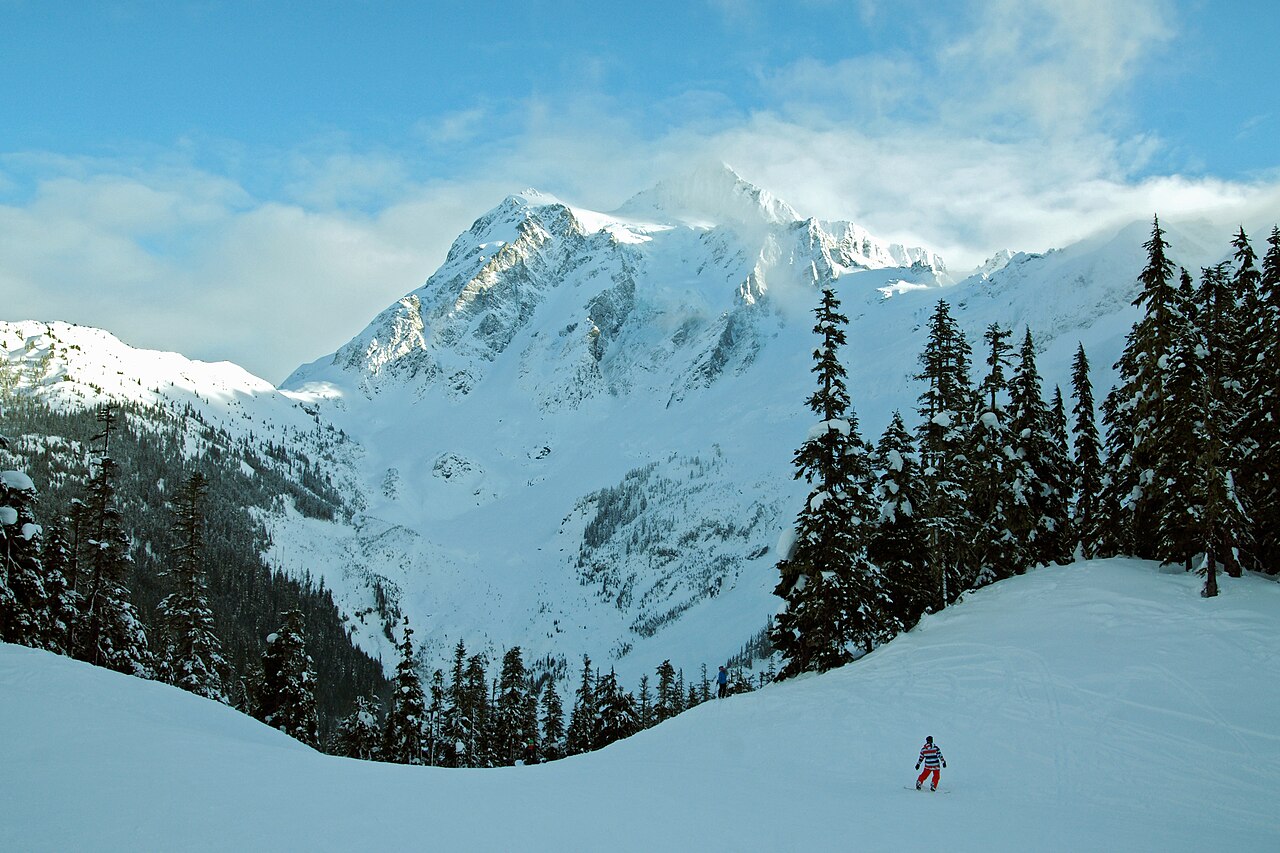
We measure snowfall the same way at 3,069 ski areas. Here are twenty-four of the most-booked names in skiing, sorted by how much snow actually falls on them.
| Snowfall | World rank | Ski area | |
|---|---|---|---|
| 649 cm | =26 | Corralco | 🇨🇱 |
| 649 cm | =26 | Mt Baker | 🇺🇸 |
| 637 cm | 29 | Whistler Blackcomb | 🇨🇦 |
| 486 cm | =87 | Chamonix | 🇫🇷 |
| 469 cm | =97 | Las Leñas | 🇦🇷 |
| 450 cm | =108 | Nozawa Onsen | 🇯🇵 |
| 426 cm | =140 | Val d’Isère | 🇫🇷 |
| 414 cm | =155 | Hakuba Happo-One | 🇯🇵 |
| 393 cm | =186 | Courchevel | 🇫🇷 |
| 357 cm | =268 | St. Anton | 🇦🇹 |
| 323 cm | =390 | Verbier | 🇨🇭 |
| 289 cm | =526 | Niseko Grand Hirafu | 🇯🇵 |
| 287 cm | =534 | Revelstoke | 🇨🇦 |
| 283 cm | =554 | Zermatt | 🇨🇭 |
| 278 cm | =579 | Valle Nevado | 🇨🇱 |
| 267 cm | =633 | Snowbird | 🇺🇸 |
| 267 cm | =633 | Alta | 🇺🇸 |
| 248 cm | =748 | Kitzbühel | 🇦🇹 |
| 242 cm | =787 | Sölden | 🇦🇹 |
| 227 cm | =899 | Park City | 🇺🇸 |
| 224 cm | =924 | Jackson Hole | 🇺🇸 |
| 197 cm | =1,174 | Cortina d’Ampezzo | 🇮🇹 |
| 194 cm | =1,201 | Aspen Mountain | 🇺🇸 |
| 178 cm | =1,335 | Vail | 🇺🇸 |
Mt Baker and Corralco get 3.6 times what Vail gets, and 3.3 times what Aspen gets. Outside Chile, almost nobody has heard of Corralco.
Read the rank column, not the names
Only three of the twenty-four are in the world’s top fifty. Thirteen of them are outside the top four hundred. Aspen, a name that works as shorthand for skiing itself, is 1,201st of 3,069.
Here is the same list as a ratio against the top of it:
| Mt Baker and Corralco get | |
|---|---|
| Whistler | 1.0× as much |
| Chamonix | 1.3× |
| Las Leñas, Nozawa | 1.4× |
| Val d’Isère | 1.5× |
| Hakuba Happo-One | 1.6× |
| Courchevel | 1.7× |
| St. Anton | 1.8× |
| Verbier | 2.0× |
| Niseko | 2.2× |
| Revelstoke, Zermatt, Valle Nevado | 2.3× |
| Alta, Snowbird | 2.4× |
| Kitzbühel | 2.6× |
| Sölden | 2.7× |
| Jackson Hole, Park City | 2.9× |
| Cortina, Aspen | 3.3× |
| Vail | 3.6× |
The two Japanese entries land in different halves of it. Nozawa Onsen is 108th in the world and Niseko is 526th, and Niseko is the one the world has heard of. Hakuba Happo-One at 155th sits between them.
Why the famous names are not the snowy ones
This is not a marketing failure. It is what happens when you look at what a destination resort is actually selling.
A resort has to be reachable, buildable and reliably open. Aspen is a town with an airport. Vail was built beside an interstate. Zermatt and Cortina were resort towns before they were ski resorts. Niseko had an existing village and, later, direct flights from Australia into a winter that sits in almost the same time zone as home.
None of those are snowfall criteria. Snow enters the decision as a minimum — enough to run a season, ideally with snowmaking to cover the gap. Past that minimum, what decides where a resort gets built is flat land for a base village, a road that stays open in February, and a population within reach.
The places at the top of the list have the opposite profile. Mt Baker has no lodging on the mountain at all. Las Leñas is five hours from Mendoza. Nozawa Onsen is a hot-spring village that acquired a ski area rather than the other way round. And none of Japan’s ten snowiest ski areas has an English Wikipedia page.
What to do with this
Separate the two questions before you book. “Where is it easy and good to spend a week” and “where does it snow” have different answers almost everywhere on this list. Both questions are legitimate. Confusing them is what produces a disappointing trip.
If you are booking on snow, this ranking is the one to use, and it runs on for 3,045 more entries. The top of it is mostly Japanese — 46 of the world’s top hundred — followed by the US Pacific Northwest (21), Norway (17), British Columbia (8), Argentina (4) and Chile (3).
If you are booking on anything else, ignore the snow column. Aspen at 194 cm is a magnificent mountain with a working town attached and reliable snowmaking. It is not a snowfall destination, and its reputation has never rested on being one.
And treat “we get X metres a year” claims with care. Resorts measure their own snowfall, at a point of their choosing, by a method of their choosing, and the figure is a marketing asset. The numbers above come from one model applied identically to every ski area on earth, which is what makes them comparable, and what makes them disagree with a lot of brochures.
How this was measured
Snowfall is the twelve-winter mean from the ERA5 reanalysis, computed identically for all 3,069 ski areas, with the hemispheres offset so a southern winter is measured June to September and a northern one December to March. Ranks are world ranks among all 3,069, not national ones — Niseko is 526th in the world and 160th in Japan.
This model understates mountain snowfall, and we measured by how much against Japanese ground stations. It returns about 56% of what they record. Every resort in this table is understated. What survives is the comparison, because the same method is applied to all of them.
Where a resort appears in our data as several sectors or several entries, we have taken the snowiest. Chamonix splits into seven sectors ranging from 327 cm at Les Chosalets to 486 cm at the Aiguille du Midi, and it is the 486 that appears above. Aspen’s four mountains range from 172 cm at Snowmass to 194 cm at Aspen Mountain and Aspen Highlands, and the 194 is shown. Zermatt and Verbier are the exceptions: we show the entry named after the resort, and the linked areas around them measure a little higher (Zermatt – Breuil-Cervinia 307 cm, the 4 Vallées around Verbier 337 cm). Neither changes the comparison with Japan.
Two further limits. A reanalysis grid cell is roughly 30 km across, so a resort’s figure describes the weather over its neighbourhood rather than at its top station, which costs an isolated steep mountain more than a broad range. And even twelve winters is a short record for places where snowfall swings hard: the ordering at the top of the table is stable, but twenty or thirty places of difference in the middle is not a real gap.
Which resorts count as “famous” is our judgement, not a measurement. We picked twenty-four names that recur across English-language ski coverage. A different twenty-four would change the details and not the pattern.
Sources: Open-Meteo historical weather data, based on the ERA5 reanalysis (Copernicus Climate Change Service); Wikidata and Wikipedia.
Revision history
- 6 October 2026. The order, headline, ratio table and ranks moved to twelve-winter figures. The snowiest of the twenty-four is now Mt Baker and Corralco, at 3.6 times Vail.
Book the trip
We do not take bookings. These are the sites Japanese ski accommodation actually sits on.
Contains advertising. We may earn a commission on bookings made through Rakuten.
Keep reading
Other guides built from the same dataset.