Where the snow falls / Planning a trip
· updated
Where Is the Next Niseko? Snowier Ski Areas With Somewhere to Stay
Thirty Japanese ski areas get more snow than Niseko Grand Hirafu and have somewhere to sleep within reach of a city. Twenty-four have no English Wikipedia page — though most have a Japanese one. The beds did not make Niseko; they arrived after it was already famous.
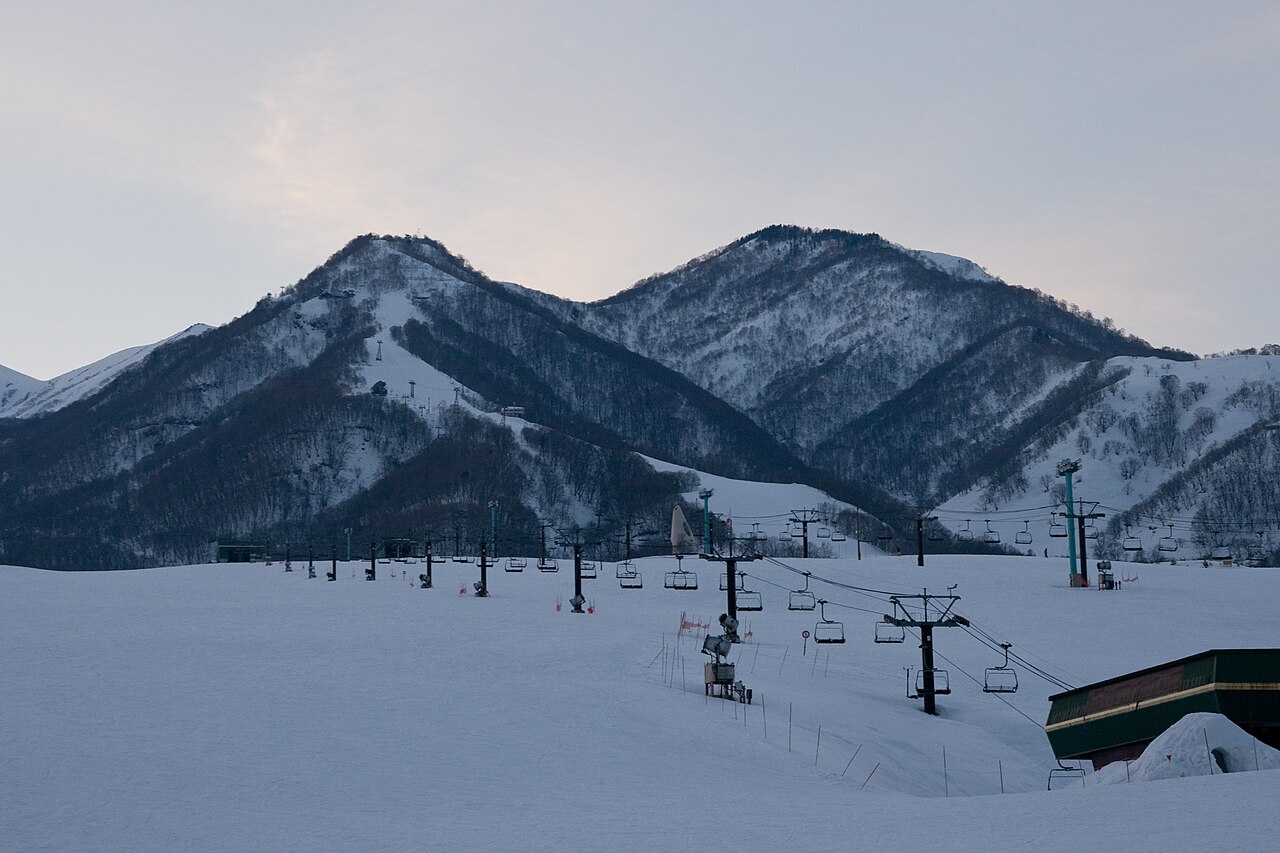
Everybody asks the same question eventually. Niseko is expensive and full, Hakuba is filling up, and the person asking wants to know where the next one is.
The honest answer starts somewhere unexpected. Niseko Grand Hirafu is the 160th snowiest ski area in Japan.
Not the 160th best. The 160th snowiest, out of 397, at 289 cm a season. There are a hundred and fifty-nine Japanese ski areas that get more snow than the place the world flies to for snow.
What Niseko actually has
| Lodging properties within reach | |
|---|---|
| Niseko Grand Hirafu | 431 |
| Sapporo Moiwa | 214 |
| Kanazawa Iozen | 111 |
| Hakuba Happo-One | 79 |
| Iizuna Resort | 78 |
| — | |
| The median Japanese ski area | 4 |
Niseko has a hundred times the accommodation of a normal Japanese ski area. Sixty ski areas in the country have none at all.
But read that column the right way round. The beds did not make Niseko famous. Niseko became famous, and then the beds were built — four hundred properties’ worth of capital arriving after the visitors did, not before them.
That matters for the question you are actually asking. A ski area with four places to stay is not disqualified from being the next Niseko. That is what Niseko looked like before it was Niseko. The bed count is a record of what has already happened somewhere, not a prediction about where it can happen next.
Thirty places beat it on snow and have somewhere to sleep
Filter for Japanese ski areas that get more snow than Niseko, have at least ten places to stay nearby, and sit within 60 km of a city of 200,000 people. Thirty qualify. The snowiest ten:
| Ski area | Snowfall | National rank | Snow quality | Places to stay | To a city | |
|---|---|---|---|---|---|---|
| Tsugaike Kogen | Nagano | 668 cm | 18 | 23 | 21 | 30.8 km — Nagano |
| Hakuba Norikura | Nagano | 635 cm | 22 | 35 | 10 | 29.8 km — Nagano |
| Hagurosan | Yamagata | 488 cm | 44 | 264 | 17 | 55.4 km — Yamagata |
| Nozawa Onsen | Nagano | 450 cm | 49 | 134 | 36 | 39.2 km — Nagano |
| Jiigatake | Nagano | 449 cm | 51 | 95 | 12 | 34.7 km — Nagano |
| Naeba | Niigata | 446 cm | 55 | 53 | 11 | 50.8 km — Maebashi |
| Akakura Kanko | Niigata | 445 cm | 56 | 92 | 26 | 26.8 km — Nagano |
| Akakura Onsen | Niigata | 445 cm | 57 | 93 | 31 | 27.4 km — Nagano |
| Madarao Kogen | Niigata | 432 cm | 64 | 64 | 26 | 24.2 km — Nagano |
| Hakuba Goryu & Hakuba47 | Nagano | 414 cm | 73 | 66 | 19 | 28.2 km — Nagano |
Twenty-four of the thirty have no English Wikipedia article. Most of them do have a Japanese one — this is not a list of obscure hills. Tsugaike Kogen gets 668 cm, ranks 18th in the country, and is well known to Japanese skiers. It simply has never been written up in English.
That is the pattern across all twenty-four. They are not undiscovered. They are undiscovered by you, because the English-language record of Japanese skiing was written about the places that marketed themselves in English.
So is one of them the next Niseko?
Possibly. But not this winter, and that is the whole point.
Whichever of these becomes the next Niseko will not have four hundred places to stay when it does. It will have twenty, and a long queue for the two restaurants, and staff who are surprised to see you. The beds arrive afterwards — that is the order things happened last time, and it takes about a decade.
So the practical question is not “which one is ready”. None of them is ready. It is whether you want to go before or after. Going after means Niseko: everything works, in English, at Niseko’s prices, alongside Niseko’s crowds. Going before means more snow, almost nobody, and a trip you have to assemble yourself — some Japanese or a translation app, a rental car or the patience to work out the bus, dinner arranged in advance because the kitchen closes at eight.
That is a trade, not an upgrade. Anyone offering you “the next Niseko” as though it were Niseko with better snow and no crowds is selling you the first thing while describing the second.
Which one, for whom
If you want the most snow: Tsugaike Kogen. 668 cm, 18th in Japan, 23rd for snow quality, 834 m of height span, 31 km in a straight line from Nagano city. It is 6.5 km north of Hakuba Happo-One in Otari village — a separate village, but part of the same Hakuba Valley lift-pass area, so a developed base is close by. This one is popular with Japanese skiers; what it is short of is not visitors but English.
If you want the best snow quality rather than the most snow: Madarao Kogen. 64th for quality against Niseko’s 38th — a much smaller gap than the snowfall ranking suggests, and it gets 432 cm against Niseko’s 289. Twenty-four kilometres from Nagano, the shortest hop to a city in the table above.
If you want a village rather than a car park: Nozawa Onsen or Akakura. Nozawa has 36 places to stay and is a hot-spring town that happens to have a ski area on it, rather than the other way round. Akakura is two adjoining ski areas — Kanko and Onsen — with 57 properties between them and 445 cm. Nozawa is one of the six on this list that does have an English page, so it is the least undiscovered thing here; that is the price of it also being the easiest.
And if you actually want Niseko’s snow: go to Niseko. 289 cm and 38th for quality is a good mountain. The argument here is not that it is bad. It is that it is not what the reputation says it is, and that the reputation has left a hundred and fifty-nine snowier places unvisited.
How this was measured
Snowfall is the twelve-winter mean from the ERA5 reanalysis, computed identically for all 397 Japanese ski areas, so the ranking holds even though the absolute centimetres run low in Japanese mountains. Snow quality is our own index — temperature when it snows, how often it snows, rain days and wind, with snowfall volume deliberately excluded.
Accommodation counts come from what is mapped on OpenStreetMap within 12 km, each place counted once for the ski area it is nearest to: hotels, ryokan, pensions, hostels and guesthouses. These are properties, not rooms or beds, and mapping is denser in places that already attract visitors, which flatters Niseko and understates quiet valleys. The gap between 431 and 4 is far too large to be a mapping artefact, but the difference between 21 and 26 is not meaningful.
City distance is straight-line to the nearest city over 200,000 people, not travel time. In mountain country those differ a lot.
“No English Wikipedia article” was checked one by one against each article’s language links, which catches English articles filed under a different title. Most of the twenty-four do have a Japanese article. The measure here is what exists in English, not whether a place is known.
Sources: Open-Meteo historical weather data, based on the ERA5 reanalysis (Copernicus Climate Change Service); OpenSkiMap, map data © OpenStreetMap contributors (ODbL); Wikidata and Wikipedia.
Book the trip
We do not take bookings. These are the sites Japanese ski accommodation actually sits on.
Contains advertising. We may earn a commission on bookings made through Rakuten.
Keep reading
Other guides built from the same dataset.