Where the snow falls / Planning a trip
· updated
Skiing From Santiago: Ski Areas Within 40 km, and Almost No Rain
Only three cities of three million or more have a 300 cm ski area within 120 km: Santiago, Seattle and Nagoya. Santiago's nearest is 38 km, about half Seattle's distance — and the fields beside it see rain on 3% of winter days against a Japanese median of 16%.
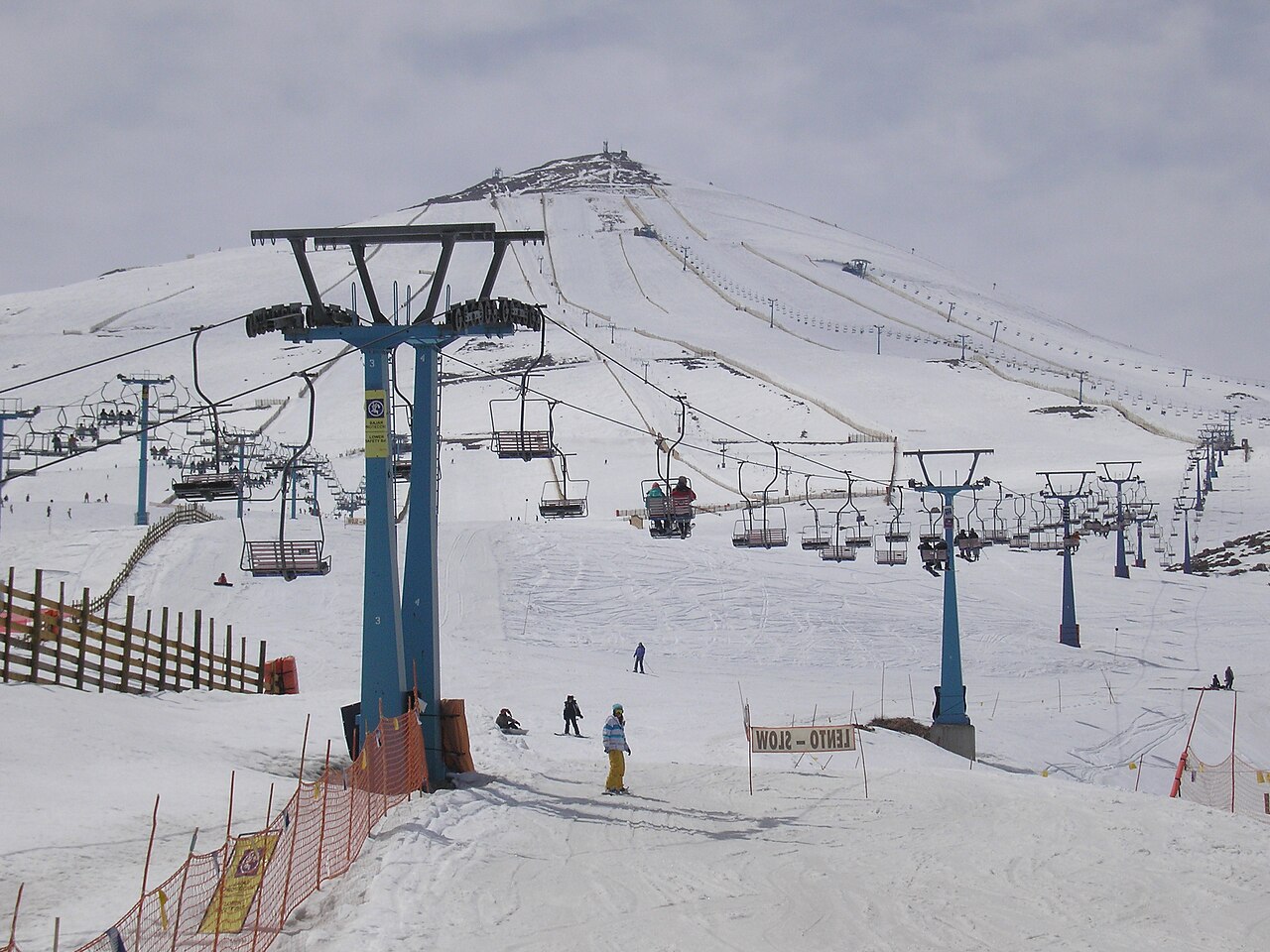
We took every city of three million people or more and looked for ski areas within 120 km that get at least 300 cm of snow a season.
Three cities have any at all.
| Distance | Snowfall | Ski area | City | |
|---|---|---|---|---|
| 38.4 km | 328 cm | Lagunillas | 🇨🇱 | Santiago (5.7M) |
| 68.5 km | 531 cm | Alpental | 🇺🇸 | Seattle (3.1M) |
| 70.0 km | 531 cm | Summit West | 🇺🇸 | Seattle |
| 71.1 km | 332 cm | Chapa Verde | 🇨🇱 | Santiago |
| 83.0 km | 326 cm | Portillo | 🇨🇱 | Santiago |
| 85.3 km | 300 cm | Kuzuryu | 🇯🇵 | Nagoya (3.2M) |
Seattle gets more snow. Santiago gets its nearest at about half the distance, from a city nearly twice the size.
And at the same distance or closer sit the three fields most people in Santiago actually mean: El Colorado at 34.8 km, La Parva at 35.5 km and Valle Nevado at 38.4 km. They take 278 cm a season, a little under our 300 cm line, and they are where the dry snow is.
And it almost never rains there
Snowfall totals are only half of it. We measure what the snow is like separately, and this is where the Santiago cluster becomes unusual.
| Rain days | Temperature when snowing | |
|---|---|---|
| Portillo | 2% | −3.4 °C |
| El Colorado | 3% | −2.9 °C |
| La Parva | 3% | −2.8 °C |
| Valle Nevado | 3% | −5.3 °C |
| Lagunillas | 9% | −1.3 °C |
Three winter days in a hundred bring rain to El Colorado. The Japanese median is sixteen.
That is what altitude and a dry continental band do. These fields sit between 2,700 m and 3,300 m at around 33°S, high enough and far enough from the ocean that the precipitation arrives frozen almost every time. It is the opposite of the Chilean lake district 400 km south, where the world’s third snowiest ski area gets its snow at +0.3 °C.
Vancouver and Sapporo are closer, and neither is this big
Widen the cut to cities of a million or more and Santiago is no longer the nearest. It is still the biggest by a distance.
| Nearest deep-snow ski area | Snowfall | City |
|---|---|---|
| 12.1 km | 631 cm | Vancouver 🇨🇦 (2.3M) |
| 21.8 km | 331 cm | Sapporo 🇯🇵 (2.5M) |
| 32.0 km | 332 cm | Geneva 🇨🇭 (1.2M) |
| 33.9 km | 302 cm | Sendai 🇯🇵 (2.3M) |
| 38.4 km | 328 cm | Santiago 🇨🇱 (5.7M) |
| 40.6 km | 330 cm | Zurich 🇨🇭 (1.1M) |
| 57.6 km | 314 cm | Turin 🇮🇹 (1.7M) |
| 68.5 km | 531 cm | Seattle 🇺🇸 (3.1M) |
Vancouver is the outright winner on this question — Grouse Mountain is 12 km from downtown and gets 631 cm, more than double what the fields above Santiago get. Sapporo has seven qualifying ski areas and the nearest is under 22 km.
What is unique to Santiago is scale. It is the only city of five million or more anywhere on earth with a 300 cm ski area inside 120 km, and it has four ski areas inside 40 km.
And on the rain column, Santiago beats both:
| Rain days | Temperature when snowing | |
|---|---|---|
| El Colorado 🇨🇱 | 3% | −2.9 °C |
| Sapporo Kokusai, Sapporo’s nearest 🇯🇵 | 6% | −7.8 °C |
| Japanese median | 16% | −3.5 °C |
Sapporo’s 6% is well under half the Japanese median and is part of why Hokkaido has the reputation it has; its snow also falls far colder. Santiago’s 3% is half of Sapporo’s.
What to do with this
If you are in Santiago in July or August, skiing is a day trip. Four fields inside 40 km, three of them on snow that gets rained on three days in a hundred. Very few capital cities offer that in any hemisphere.
Distance here is straight-line, and that matters more than usual. The road to El Colorado and La Parva climbs through dozens of hairpin switchbacks. Thirty-five kilometres on the map is well over an hour of driving, and chains are often required. Read the figure as “close” rather than as a travel time.
Take the altitude seriously. These fields top out above 3,300 m. Arriving from sea level in Santiago and skiing hard the same morning is a real way to feel very bad, in a way that Japanese or Alpine resorts at half the height do not prepare you for.
And if you want depth rather than dryness, look south. The Chilean lake district gets far more snow — Nevados de Chillán is third in the world, but it arrives warm and wet. The two halves of Chilean skiing are genuinely different products.
How this was measured
Snowfall is the twelve-winter mean from the ERA5 reanalysis, computed identically for all 3,069 ski areas, with the southern winter measured June to September. The model understates mountain snowfall — about 56% of what Japanese ground stations record, so every centimetre figure here is a floor, and the comparison is the part that holds.
Distance is straight-line from the ski area to the city centre, not travel time. City populations come from Natural Earth’s populated-places dataset, which uses metropolitan figures; a different source would move Santiago and Seattle by a few hundred thousand without changing the ordering. The three-million cut and the 300 cm floor are our choices — lower either one and more cities qualify.
The rain and temperature figures come from our snow-quality dataset, which covers 456 ski areas: the 397 in Japan and 59 below the equator. We have not measured North America or Europe on those columns, so the Seattle entries appear on snowfall and distance only, and the “Japanese median” is a median of Japan rather than of the world.
Chile has eleven ski areas in our measurements, including El Colorado, La Parva, Lagunillas and Nevados de Chillán.
Sources: Open-Meteo historical weather data, based on the ERA5 reanalysis (Copernicus Climate Change Service); Natural Earth.
Book the trip
We do not take bookings. These are the sites Japanese ski accommodation actually sits on.
Contains advertising. We may earn a commission on bookings made through Rakuten.
Keep reading
Other guides built from the same dataset.